We're Middle School Students Writing about Reading!

Welcome to our blog--we're always in the middle of a good book here!

Our posts may include book reviews, original fiction, interviews with authors and bloggers, fan-fiction, fan art, and more, so join us in our journey to explore great books and learn about book blogging!


Showing posts with label adult fiction. Show all posts

Thursday, June 14, 2012

All the Mountains of Madness, a review by Beren


Title:  At the Mountains of Madness 
Author:  H.P.Lovecraft.
Format: Hardback copy containing many writings of different books, so it is a large volume, but costing the low price of  $12.95.    

A team of scientists goes on an exploration into the antarctic looking for ancient fossils and rock, and after some time a giant mountain range is found, taller than the Himalayas. While drilling for rock they uncover a cave filled with fossils of the ancient past, and after exploring the cave discover several preserved creatures unlike anything ever before seen: gray, tubular, tentacled, vile looking things of anatomy unlike anything seen before. 

Contact is lost with the group exploring this area, and once help from the rest of the expedition arrives, they find the area in shambles from a storm, but more disturbingly several of the creatures are gone, and several are seemingly buried in a grave. Everyone who was at the camp is found mangled and dismembered, and a dog and a human are found to be dissected in the camp. 

The remaining members go on an expedition over the mountains to explore what no one else ever again find, and discover a vast ancient city, seemingly entirely  abandoned, with architecture unlike anything else seen on Earth. They then enter the city, and soon find horrors they will never forget...

William Dyer is a professor of geology at Miskatonic University, and the story is told from his point of view, addressing the reader about what happened on the expedition. His motivation is for finding fossil and rock samples and gathering information, though ultimately it is curiosity. The writing of his is an informative narrative, and it seems the only growth he has had is through his gained knowledge and viewpoint. 

Another major character is Danforth, a graduate student from the university who is also on the expedition. He and Dyer are the only humans to see the city. He is shaken after the story and has never quite recovered from the expedition, feeling paranoid and often breaking down, and having trouble speaking about the events that occurred. There are no other major characters, as it is mostly Dyer documenting what happened and trying to dissuade future explorers. 

The theme seems to be on human curiosity and the unknown, although it is written mostly to present a interesting narrative, and it could be considered horror to an extent as well. 

I enjoyed the book very much, particularly the ending, which I found to be a very good way to wrap up such a story. The writing is very unique, and is very well written; I cannot find any weaknesses to it. I have a collection of works by this author, and will definitely read more stories, I am glad to have learned about this author. 

The cover is interesting, but has nothing to do with this story in particular, as the book contains many of Lovecraft's writings. 

The book is slightly horror, but I would say if you have the reading level to be able to understand the writing you are certainly mature enough to handle it. 

I would say this book is five out of five.


Tuesday, May 29, 2012

The Secret Life of Bees, a review by Tanna

Title: The Secret Life of Bees
Author: Sue Monk Kidd
Format:  I read a paperback version of the book.
Price:  $14.00.

Summary:
The story begins on a Peach farm owned by T.Ray Owens, where he and his daughter Lily (both white) live and work. He isn’t very nice and doesn’t show affection and is sort of abusive. T.Ray has had a bad attitude towards Lily ever since she accidentally killed her mother. When T.Ray tells Lily that her mother left, she runs away, and along the way, breaks Rosaleen out of jail from the hospital. Rosaleen looked after her along their journey of running away, and also, from when Lily was 4. Before running away, Lily had found a Black Mary picture with ‘Tiburon, SC’ written on it, so that’s where she went. She goes to the house of August Boatwright(who is a black woman of BUZZness (tends to bees and sells honey)), who openly accepts her into the home, which is also home to August’s sisters May and June. Lily and Rosaleen spend their summer there with the Boatwrights, befriending others along the way, and working for August to help keep the honey business afloat.

Characters:
 Lily Owens is a 14-year-old white girl born on July 4th, 1950 living with her unloving father T.Ray in Sylvan. She is looked after by Rosaleen and can trust her with anything. She is also confused about all of the racism that is occurring around her.


Rosaleen Daise is a large black woman who isn’t afraid to openly speak her mind. She looked after Lily after her mother died and has created a strong friendship.


August Boatwright, also African American, opens up her home and welcomes Lily and Rosaleen into it after Lily lies her way into staying. August had cared for Lily’s mother when she was younger, and knew Lily was her daughter right from the start, but wanted to wait until Lily was ready to talk about it.

Theme:  One of the themes of the story is mothers. That theme is shown throughout the book a lot, for example, Lily loses her mother, and when she goes off to find out more about her mom, she learns a lot about herself, and also, meets other women who now acted as mother figures to her. Another example of the theme is the Virgin Mary(a.k.a. Black Madonna) guided all of them through the twists and turns on the rollercoaster of life. 


Strengths- The entire book was just one big strength because it was so well written and had so many lessons and such in it. Another strength was how strong the women were in this book, even though they had less rights in that time.

Weakness(es)- The start of the book wasn’t very attention grabbing and a bit boring.

Ending Thoughts- The ending of the story was excellent and very enjoyable. Some of the things that happened in the end I had hoped for, but there were also some additional things that made the ending not as good. 


Rating: 4.5 chocolate bars out of 5.
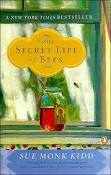
Cover Thoughts: The cover of the book suits it very well because it has the honey jar with the picture that led the main character to where she was destined to go. I also liked how there was just a solitary bee on the cover as well because it looked like it belonged there, and without it, the cover would be more bare. 
Appropriateness:
Language: Some swearing that wasn’t too dominant in the book, but there was also some offensive language in the book, too. There was a lot of racism in the story because of the time period it taking place in, which was just when the Civil Rights Act has been passed.
Violence: There was some violence where there was beating and cruel treatment, but it wasn’t too dominant and only in a few parts.
Sexual Content: There was barely any, if not, no sexual content in the story at all.
Mature Themes: Throughout, Lily was finding herself and growing up, but there weren’t really inappropriate mature themes.
I would recommend this book to ages 13 and up. 

Wednesday, May 16, 2012

Mirror, Mirror: a review by Shannon

Book Title: Mirror Mirror
Format: Paperback
Price: $14.95 (U.S.)


Plot Summary:
Bianca de Nevada is just a seven-year-old girl living with her father, Don Vicente, at their beloved farm Montefiore. She has no relevance whatsoever to the life of a Pope's envious daughter, and therefore, Bianca is innocent to any crime charged against her...right? Wrong. When the young and beautiful daughter-of-the-Pope Lucrezia Borgia subtly forces Don Vicente to go on a presumably hopeless quest to find the Apples of the fabled Tree of Knowledge, Bianca is left stranded on her father's farm under the charge of Lucrezia herself. As the years pass, the hope of Don Vicente's return becomes less and less dominant, and by age eleven, Bianca still resides with Lucrezia Borgia. Bianca's growing charm and beauty begins to entrance those around her, leaving Lucrezia dismissed and very, very...jealous. Getting rid of the child seems the only way to go, but Lucrezia never counts on the involvement of seven (eight?) "dwarves," a stolen mirror, a repenting hunter, and Bianca's own persistence, and it's these very things that ultimately decide the fate of the trickster...and the tricked.


Character Analysis:
Bianca de Nevada----

Description: Bianca's age increases throughout the book, but she starts out at age seven and ends in her early twenties. Bianca is a polite, curious, caring, beautiful girl (inside and out) who dearly loves her home, Montefiore, as well as her loving father. She helps around the home, but Bianca doesn't really have any good, good friends because she keeps to herself and the servant-girls mostly ignore her.

Motivations: By age eleven, Bianca's hope is that her father will return home, but when she wakes up at the dwarves' house, her motivation is to understand the dwarves (magic?) and to be able to find her way home. The hope of her father's return still rests in Bianca's mind as well.
    
Growth: Bianca starts out as a curious seven-year-old with a small eye for trouble, and her curiousness doesn't exactly evaporate even as she ages. She does become more independent, especially because of the disappearance of her father, the only parent she has even known. Bianca's knowledge of the world increases as well. For example, she takes extreme caution when Lucrezia shows up at the dwarves' in disguise. By the end of the book, Bianca has become a smart, sensible young lady, yet I had the feeling that she retained at least some of her younger self's curiousness.


Strengths/Weaknesses:
One of the strengths of Mirror Mirror was that it was very creative, in terms of taking a well-known fairy tale (Snow White and the Seven Dwarves) and twisting it up so it had a fresh, innovative voice. I anticipated this to be a very predictable book, but on the contrary, I was surprised at many points throughout the book because of the creative turns the story took. Another strength with the book was that while some characters were based on characters from the original Disney story, each character had its own unique personality that was very interestingly expressed through dialogue, motivations, and basic interactment with each other. I also liked how there were additional characters not involved in the Disney story. This helped to give Mirror Mirror its ingenuity.

One of the weaknesses in the story was that it was a little confusing at some parts because of the fact that Maguire switched perspectives so frequently. Although that was a cool touch, it was also a little overwhelming sometimes when I was trying to grasp what had just happened. Then again, perhaps if I were older, the frequent switching wouldn't even make a dent in the understanding I had of the book (this wasn't a huge problem--just a minor issue). Sometimes it was confusing when the scene involved the "dwarves" because of the giant metaphor (was it just a metaphor?) that the "dwarves" were rocks. As the story progressed, though, it was easier to tell what was going on with the dwarves.

My favorite part of the book was probably when Bianca lived with the dwarves, especially when Lucrezia Borgia came to visit because it was climatic and--in the former mentioned--sometimes funny. The creative names for the dwarves also told a lot about their personalities, which was cool.

Theme:

I thought that there were two important lessons in the book that kind of coincide. The first is this: What a person looks like on the outside doesn't always reflect who they truly are on the inside. The second: If you let greed and obsession overtake you, you will lose who you are as a person, because it's more important to appreciate who you are than wish to be something you're not.


Ending of the Book:
I thought the ending was very satisfying once I read it over and realized what had happened. The ending was satisfying because it wrapped up the book very nicely but also gave the reader room to speculate what would happen to Bianca and the rest of Montefiore in the future.

The genre was definitely fantasy, but it was set in a real time period (the early 1500s), which gave it--despite its unrealistic pieces--a rather familiar feel. I like how the author used Lucrezia Borgia, a real (now deceased) person too, because it contributed to the book's uniqueness.

Although I haven't read any other books by Maguire, I'd like to, especially Wicked: The Life and Times of the Wicked Witch of the West because it sounds interesting (in the point of view of the "bad guy" in the Wizard of Oz). Other books by Maguire include Lost and Confessions of an Ugly Stepsister.

Rating: 4.5 out of 5 chocolate bars
Cover Thoughts: The cover I had was a picture of Montefiore in all its lush, green expanse, as well as seven of the dwarves traipsing up the path to the farm. In the middle of the cover, there is an oval hole that reveals the face of seventeen-year-old Bianca de Nevada, who is holding an apple. If you open the cover to the first page, you can see the picture of Bianca from the front, as well as what was concealed by the rest of the cover: Lucrezia and a man (either the hunter or Vicente, probably). This cover is really cool to me because it totally symbolizes the book in two ways: one, the cover looks like a mirror, and two, it shows that what's on the outside isn't always what's on the inside.
Appropriateness: In this book, there is sexual reference. As for the rating, I guess it depends on what you're used to in a book. I'd rate it Vampire, personally, but some might say Death.


Tuesday, March 8, 2011

The Kite Runner, by Khaled Hosseini

Review by Up North Girl of The Kite Runner by Khaled Hosseini 

First off, let me tell you that I am not one to cry in books or
movies. I’ll cry about things in real life, but not fantasy. Marley & Me didn’t even get me. But The Kite Runner? That book had me nearly sobbing at the end.

It was well-written, and Khaled Hosseini really has a knack for writing endings that are happy, but still make you cry. He did the same thing in A Thousand Splendid Suns. Both endings were not exactly happy, but hopeful. And for some reason that really got me. I loved the winding story of The Kite Runner and how he kept looping back to things at the beginning of the book; how Hassan named his son Sohrab after the hero in the stories that Amir read him, how Assef made another appearance, things like that.

I must warn, however; this book is NOT for the faint of heart. It was very violent, and at some parts, had some adult writing and scenes. Some of them left ME scarred, and let me tell you, I’ve read a lot of books. This one and Hosseini’s other book had me trembling. What makes it so powerful is that the horrible things that happen in it aren’t fantasy. It’s not a dystopian future. And it didn’t happen several hundred years in the past, either, which is what you expect when you think about brutal torture. It happened less than ten years ago, and in some parts of Afghanistan, it’s still going on. As I said, not for the weak hearted.
All in all, I think this was a wonderful book, and if you’re looking for a book that will really make you think, this might be the one for you.

4 ½ out of 5 chocolate bars.

Death rating for appropriateness.

Monday, November 15, 2010

Water for Elephants, by Sara Gruen


Jacob Jankowski is left without money and family when his parents are killed suddenly in an automobile accident. He leaves veterinarian school right before he finishes his final exam and accidentally becomes the veterinarian for the Benzini Brothers Circus. There he meets Rosie the Elephant and Marlena, a beautiful (and married) performer in the circus.

(Summary from Librarything.com)

As most of you know, I recently interviewed author Sara Gruen about her new book, Ape House. My father knew Sara Gruen before she became an author, and I've always been meaning to read Water for Elephants. Well, I finally got around to it a few days ago.

This book has quickly become one of my favorites. I thought it was very interesting that she put authentic circus pictures at the beginning of each chapter, since she got the actual idea for the book from a circus photo. I enjoyed looking at the pictures from that time period; it really made me feel like I was in the book. The book is woven so seamlessly and perfectly together. I was amazed! The ending made me want to cry, in a good way. In a happy way.

I really, really, REALLY did not like August, though. I would have hated to be Jacob, the way August would be charming and kind one minute and then screaming and throwing things the next. I would definitely recommend this book, but NOT to middle school students. Many parts are EXTREMELY inappropriate, as is one of the pictures. If you really want to read this book, have your parents read it first and approve it. But for adults, this book is amazing, and is a must-read.

Kudos for Sara Gruen!!


I give this book five chocolate bars. Death rating for appropriateness.

Monday, October 25, 2010

Interview with Sara Gruen, author of Ape House and Water for Elephants

Less than a week ago, I had the immense honor of being able to interview author Sara Gruen, whose works include Riding Lessons, Water for Elephants, and her newest book which within a few weeks jumped to number six on the New York Times best seller list, Ape House.


Q: How was your book tour?
A: It was grueling, lots of time in airports….

Q: What was your first book called, and was it ever published?

A: My first book was not published, and hopefully never will be. My husband threatened if I get hit by a bus he will publish it… Well, now I’m looking both ways crossing the street! It is NOT publishable.

Q: What was your first book about?

A: Well, lots. I guess it was a kitchen sink book. It is mostly about a very stupid kleptomaniac that worked high finance, a patsy; she had dreams of being best seller. She plagiarized work but got caught in an Enron type thing…It’s fun, but I don’t want people to think of that as me or my work.

Q: What inspired you to write your first book?

A: I always wanted to write, that’s why I wrote tech. I got a degree in English literature and took creative writing but when I graduated, I needed a job. That’s how I fell into software.

Q: How did you feel when your book became so famous?

A: Well, with Water For Elephants, it’s funny, because it was really a slow burn, I didn’t know. I had no publisher for it when I wrote it, I just hoped someone would pick it up. Then it was, but at last minute. There was a very small print run, and the first edition copies were shorter than the real one. If you have first edition, keep it!  Like I said, it was a slow burn… I don’t know if there was a minute when I said OK. It was more a collection over two years, then I slowly realized it would be OK.

Q: Tell us a little bit about your newest book, Ape House.

A: It’s about well, lots, but family of bonobo apes, one of the four “great apes”. They are very egalitarian, very amorous. This book has a hard look at the culture of celebrity, twitter--instant communication, how it makes us feel like we know someone we’ve never met, at a distance, hiding behind a monitor as people make train wrecks of their life…

Q: Are any characters in any of your books based off of people in real life?

A: No...well, yes and no…some of the researchers on the great apes are in the book; I didn’t disguise names much, only as much to ensure that people know who they are. But characters, I don’t do that…very little is private in my life now, and I want to defend that the best I can. I use little details, like I used to eat Ramen noodles separately like some characters do. That’s not my character, but little things in life I used in the book.

Q: Which of the characters in the books do you think is most like you, and how?

A: Uhhm…I really haven’t written any like me, and I don’t plan to.

Q: Are you planning on writing more books in the future?

A: Yeah, this is my life now. I’m planning on starting a next book in three months, but I can’t write on airplanes at all, I can’t be that super human…the idea…Uhm, OK… [laughs] I do have an idea floating around my head for another book.

Q: How did you come up with the ideas for Water For Elephants and Ape House?

A: I opened paper one day and saw a vintage circus photo. It was taken by a home-made camera. It was huge! The camera weighed like 25 pounds, and it produced negatives up to 12 inches by 24 inches, and the camera caught an enormous amount of details. It seemed like anything could happen, and could because pictures proved it! I picked up a novel I abandoned a while ago, and it just turned into Water For Elephants.

For Ape House, I got an email to a Great Ape website. I was fascinated; I’d never heard of bonobos, and I soon knew I wanted to write a book about them. But also knew I had to meet them, because wanted to do it authentically.

Q: Now, you spent two years researching and communicating with the bonobo apes, correct?

A: Three years, actually. The last time I saw them was September 8, and this is my third year with them…I will always go and visit them as long as I am invited; they are true friends.

Q What was it like to meet the apes?

A: Oh, it was incredible! I knew the science, and I did a crash course. Others do up to twenty years of classes before they can meet the apes, so I had to crash course. It was so amazing to have a real tea party in forest with the apes, who asked everything from who had eggs for breakfast to requesting us to bring back the Easter bunny!

Thank you, Sarah Gruen, for agreeing to speak with us!

By: Up North Girl